
Communication in project management determines whether a project succeeds or fails. You can have skilled teams, clear goals, and strong tools, yet poor communication will still derail results. Projects involve people, timelines, budgets, and expectations. Communication connects all of them.
If you manage projects or plan to move into a project role, you need to understand how communication works, why it matters, and how to control it. This guide explains communication in project management from a practical perspective. You will learn how to plan it, manage it, and improve it across every project phase.
What Is Communication in Project Management?
Communication in project management is the structured process of sharing information between teams, stakeholders, and decision-makers throughout a project. It ensures that everyone understands goals, progress, risks, and changes.
Project management communications cover:
- Information flow between stakeholders
- Status updates and performance reports
- Issue escalation and resolution
- Decision approvals and documentation
Communication supports every stage of the project lifecycle. It connects scope, schedule, cost, and quality with people and processes.
Key elements include:
- Stakeholders and sponsors
- Deliverables and milestones
- KPIs and progress metrics
- Risk registers and change logs
Without clear communication, even simple projects face delays and conflict.
Why Communication Is Critical to Project Success
Strong communication is the backbone of project alignment, helping teams, leaders, and stakeholders work efficiently toward common goals.
1. Importance of Communication in Project Management
The importance of communication in project management comes down to alignment. Teams need clear direction. Stakeholders need transparency. Leaders need accurate data.
Effective communication in project management helps you:
- Prevent misunderstandings and scope creep
- Keep teams focused on priorities
- Support on-time delivery
- Maintain budget control
When communication works, decisions happen faster and with less friction.
2. Impact of Poor Communication on Projects
Poor communication creates measurable damage. Common outcomes include:
- Budget overruns due to rework
- Missed deadlines from unclear ownership
- Stakeholder dissatisfaction
- Team conflict and low morale
One key metric affected is Budget at Completion in project management. When communication fails, forecasts lose accuracy and costs increase.
Project Management and Communication Across the Lifecycle
Communication and project management must stay aligned from start to finish. Each project phase has different communication needs.
1. Communication During Project Initiation
During initiation, communication focuses on clarity.
- Define objectives and success criteria
- Identify stakeholders and decision authority
- Set expectations for reporting and approvals
Clear early communication prevents confusion later.
2. Communication in Project Planning
Communication planning in project management happens here.
- Define what information gets shared
- Decide who receives it
- Set frequency and format
This phase produces the first version of the communication plan in project management.
3. Communication During Execution and Monitoring
Execution requires steady communication.
- Status reports track progress
- Risk updates highlight issues
- Escalation paths support fast decisions
Monitoring relies on consistent project management communication to keep performance visible.
4. Communication at Project Closure
Closure communication focuses on documentation.
- Final reports and outcomes
- Stakeholder sign-off
- Lessons learned
This information supports future projects and process improvement.
What Is a Communication Plan in Project Management?
A communication plan in project management defines how information flows throughout the project. It documents what gets communicated, who sends it, who receives it, and when it happens.
The communication management plan in project management expands on this by adding governance and control processes.
Key Elements of a Project Management Communication Plan
A strong project management and communication plan includes:
- Stakeholder list and roles
- Communication channels
- Reporting frequency
- Message format and ownership
- Escalation rules
This structure reduces confusion and supports accountability.
Project Communication Management Types
Project communication falls into several types:
- Formal communication such as reports and presentations
- Informal communication such as team chats
- Internal communication within the project team
- External communication with clients and vendors
Balancing these types improves clarity without overload.
Balancing these types improves clarity without overload.
How to Create an Effective Communication Plan in Project Management: Step-by-Step
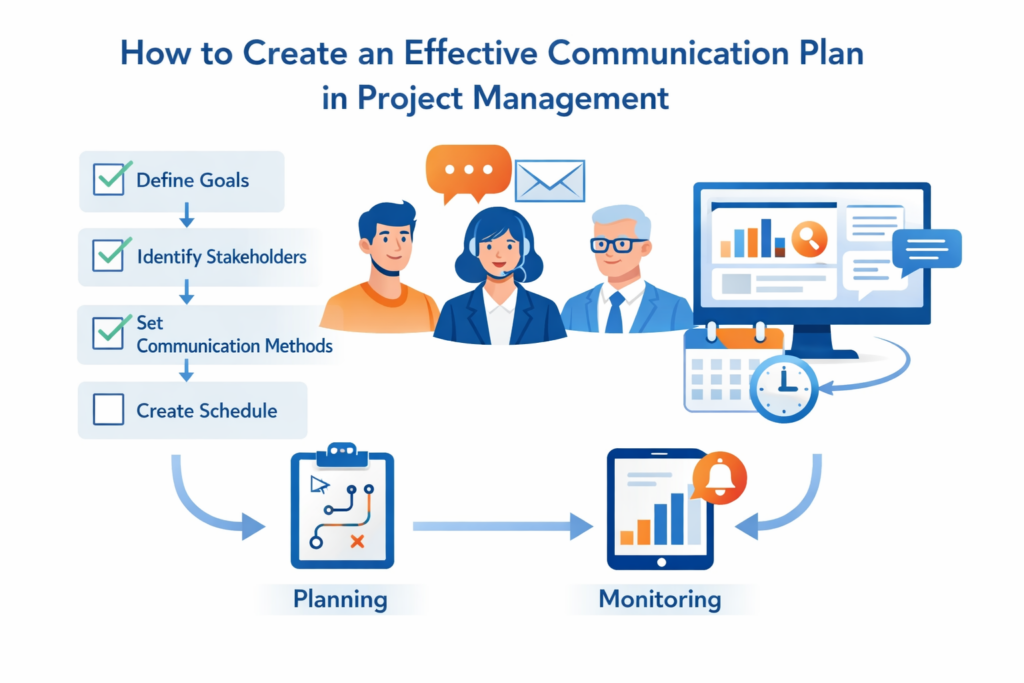
Follow these steps to build a clear and reliable communication plan in project management. A structured approach improves coordination, reduces rework, and supports faster decision-making.
- Identify stakeholders: List everyone who needs project updates or approval, such as sponsors, clients, team members, vendors, and leadership. Missing stakeholders often causes misaligned expectations.
- Define communication needs: List everyone who needs project updates or approval, such as sponsors, clients, team members, vendors, and leadership. Missing stakeholders often causes misaligned expectations.
- Select communication channels: Match the message to the right channel and use it consistently. This helps stakeholders know where to find information.
- Set frequency and format: Decide how often updates are shared and in what format. Daily updates support teams, while weekly or milestone reports suit leadership.
- Monitor effectiveness: Review feedback and delays, then adjust channels or frequency as needed to maintain clarity and trust.
This process keeps communication structured, predictable, and aligned with project goals.
Importance of Communication Channels
The importance of communication channels lies in clarity and speed. Different channels serve different purposes.
Common channels include:
- Meetings for discussion and decisions
- Email for formal records
- Dashboards for real-time visibility
- Project documentation for reference
Choosing the wrong channel often causes delays or misunderstandings.
Communication Barriers: Key Challenges in Project Management
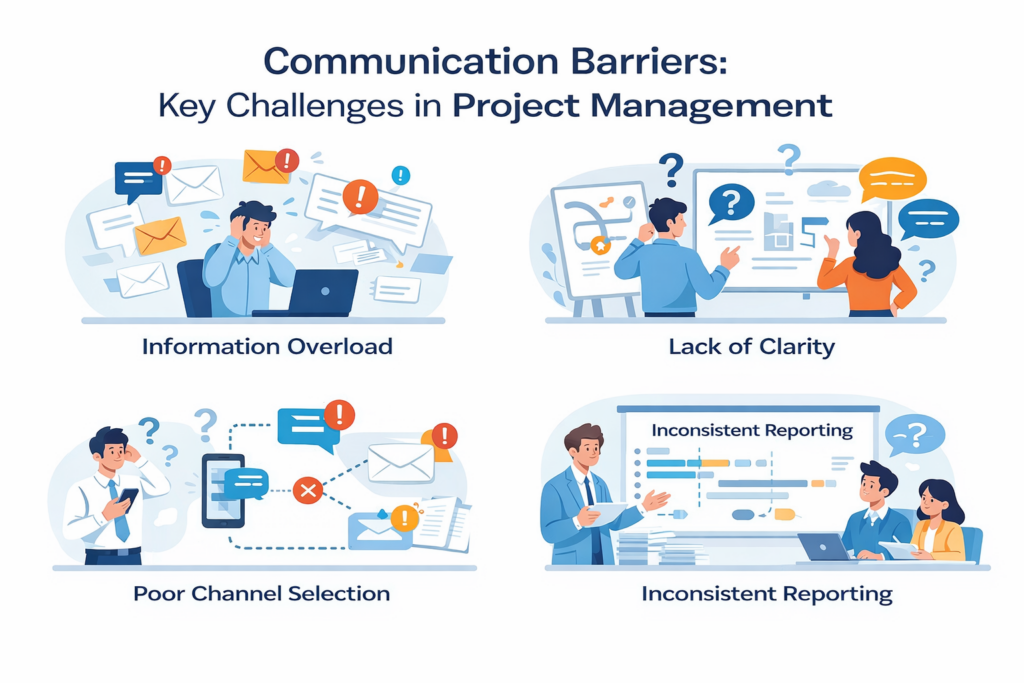
Effective communication is critical, but projects often face barriers that slow progress. Understanding these challenges helps teams address them proactively.
1. Information Overload
- Too many messages can overwhelm stakeholders
- Important updates may get lost in the clutter
- Leads to missed deadlines and confusion
2. Lack of Clarity
- Vague or ambiguous messages create misunderstandings
- Team members may interpret instructions differently
- Causes errors, rework, and delays
3. Poor Channel Selection
- Using the wrong communication method slows response
- Critical updates may not reach the right people
4. Inconsistent Reporting
- Irregular updates reduce trust and accountability
- Makes monitoring progress difficult
Addressing these barriers ensures smooth collaboration and successful project delivery.
Project Management Communication Strategies That Work
Clear communication strategies help teams stay aligned, reduce errors, and maintain steady project progress.
1. Effective Communication in Project Management
Strong communication strategies focus on clarity and consistency.
- Use simple, direct language
- Share updates on a fixed schedule
- Confirm understanding and next actions
Effective communication in project management lowers risk and builds trust among teams and stakeholders.
2. Quality vs Quantity in Communication in Project Management
More messages do not improve results. Quality and relevance matter more than volume.
Best practices include:
- Share only relevant information
- Avoid duplicate or unnecessary updates
- Focus on decisions, risks, and required actions
This keeps attention on priorities and prevents information overload.
3. Communication and Project Management in Remote Teams
Remote work increases communication risk without structure. Successful teams rely on:
- Asynchronous updates for flexibility
- Clear and accessible documentation
- Written decision records for accountability
This approach supports different time zones and reduces unnecessary meetings.
Project Communication Tools and Software
Modern teams rely on digital tools to keep communication clear, structured, and efficient.
Popular project communication tools include:
- Slack – team messaging and quick updates
- Microsoft Teams – meetings and collaboration
- Jira – issue tracking and task management
- Asana – task coordination and project tracking
- Trello – visual workflows and progress boards
These tools help teams maintain organized, consistent project management communications.
Want to explore the best AI tools for project management teams?
👉 Check out Best AI Tools for Project Management Teams for templates, automation, and smart collaboration solutions.
Communication Management Plan in Project Management
A well-structured communication management plan ensures information flows smoothly, roles are clear, and projects stay on track.
1. PMI Best Practices for Communication Management
The Project Management Institute (PMI) identifies communication as a core knowledge area. Their frameworks emphasize:
- Planned communication processes for each project phase
- Documented responsibilities for updates and approvals
- Regular performance reporting to stakeholders
These practices support control, accountability, and project transparency.
2. Expert Insight
Experienced project managers note that communication failures are a leading cause of project issues. Clear ownership, concise reporting, and consistent feedback reduce risk and improve outcomes.
3. Real-World Example
A mid-size software team experienced repeated delays due to inconsistent status updates. After implementing a structured communication management plan, reporting became standardized, decisions were faster, and delivery stabilized within two release cycles.
Frequently Asked Questions
Why is communication important in project management?
It aligns teams, controls risk, and supports on-time delivery. Without it, projects lose direction.
What is a communication plan in project management?
It documents how information flows, who receives it, and when updates occur.
How do you improve communication in project management?
Use clear plans, choose the right tools, and maintain consistent reporting.
What tools are used for project communication?
Common tools include Slack, Microsoft Teams, Jira, Asana, and Trello.
What happens when communication fails in a project?
Budgets increase, deadlines slip, and stakeholder trust declines.
Strengthen Your Project Communication Strategy
Communication drives alignment, accountability, and control in every project. Structured communication planning prevents errors and supports better decisions. The right channels and tools keep teams focused and informed.
If you want ready-to-use communication templates, planning tools, and automation resources to improve your project workflows, take the next step.
👉 Get the Free Business Toolkit now at BetterBizTools and improve how you manage project communication.