
Choosing between Constant Contact vs Mailchimp in 2025? You’re not alone. After spending over a decade helping businesses grow through email marketing, I know firsthand how tricky this decision can feel. Constant Contact vs Mailchimp — which one truly fits your goals?
Here’s the quick take: Mailchimp offers advanced automation and flexibility for marketers who want deeper control and detailed segmentation. On the other hand, Constant Contact shines with its simplicity, ease of use, and strong support — making it a great choice for beginners, small businesses, and local organizations.
In this updated 2025 guide, I’ll break down their key features, pricing, pros, and cons based on real-world experience, so you can confidently choose the best fit for your business.
Let’s dive in and make this choice crystal clear.
Quick Comparison Table: Mailchimp vs Constant Contact At A Glance
| Feature | Mailchimp | Constant Contact |
| Free Trial | Free plan forever (with limits) | 60-day free trial |
| Entry-Level Price | $13/mo | $12/mo |
| Deliverability Rate (avg.) | 91-97% | 89-95% |
| Automation | Highly advanced | Simple but effective |
| Integrations | ~300+ | 7000+ |
| Best For | E-commerce, advanced marketers | Small businesses, local marketing |
(Note: Pricing varies by contact list size. Always check the latest tiers.)
Read Also: Top SaaS Email Marketing Strategies: The 2025 Guide
How Easy Are They To Use? The Email Builder Face-Off
When people ask me which is better — Mailchimp vs Constant Contact — they usually mean: “Which one is easier to use?”
Mailchimp’s Builder
Mailchimp’s drag-and-drop editor in 2025 is slick. They’ve modernized the interface so it’s less cluttered than it was a few years ago. I recently built a client newsletter in under 30 minutes — and that included testing the mobile previews. The templates look sharp and professional. The only catch? Some features hide behind paywalls.
Mailchimp – Pros:
- Powerful automation
- Beautiful templates
- Great reporting
- Affordable for small lists
Mailchimp – Cons:
- Steeper learning curve
- Costs escalate fast
Constant Contact’s Builder
Meanwhile, Constant Contact remains the “friendly neighbor.” Its editor is super simple. Fewer bells and whistles, but that’s not always a bad thing. For clients who aren’t tech-savvy, Constant Contact lets them just click, drag, and send.
Constant Contact – Pros:
- Super easy for beginners
- Massive integrations library
- Fantastic support
- Great for local businesses
Constant Contact – Cons:
- Less advanced automation
- More expensive as list grows
My Advice:
- Choose Constant Contact if you’re a total beginner.
- Choose Mailchimp if you want design flexibility and a polished look.
Read Also: Mighty Networks vs Circle in 2025: The Clear Winner?
Templates and Design Flexibility
- Mailchimp offers hundreds of templates, many optimized for e-commerce.
- Constant Contact has a smaller library but easy customization.
- Mailchimp’s editor feels more modern and dynamic for brand consistency.
I’ve personally used both for local business newsletters, and while constant contact or mailchimp both worked, I preferred Mailchimp for sharper designs.
Automation & Smart Campaigns: Who’s Smarter?
This is where the pros and cons of mailchimp vs constant contact really start to matter — especially if automation is a priority for your email strategy.
Mailchimp’s Automation
Mailchimp offers powerful automation tools built for marketers who want advanced control. You can set up:
- Abandoned cart emails to recover lost sales
- Behavioral triggers based on clicks, views, and site activity
- Multichannel flows across email, SMS, social ads
- AI-optimized send times for better open rates
I recently built a campaign targeting visitors who clicked a product link but didn’t buy. Mailchimp tracked exactly who returned and converted after follow-ups — a game-changer for ROI.
If you’re looking for flexibility and depth, Mailchimp is built for serious marketers.
Constant Contact’s Automation
Constant Contact keeps things simple — and that’s its strength. You get:
- Welcome emails
- Birthday and anniversary promos
- Basic drip campaigns (great for onboarding or nurturing)
For small teams or beginners, it’s easy to use and quick to set up. I’ve seen nonprofits and local businesses thrive on this kind of automation without needing a full-time marketer.
Tip
If you need advanced logic and multi-step workflows, Mailchimp wins. But for straightforward follow-ups and ease of use, Constant Contact does the job — no learning curve required.
Read Also: Best CRM for Nonprofits in 2025 (Top Picks + Guide)
List Management & Segmentation: Growing Your Audience The Right Way
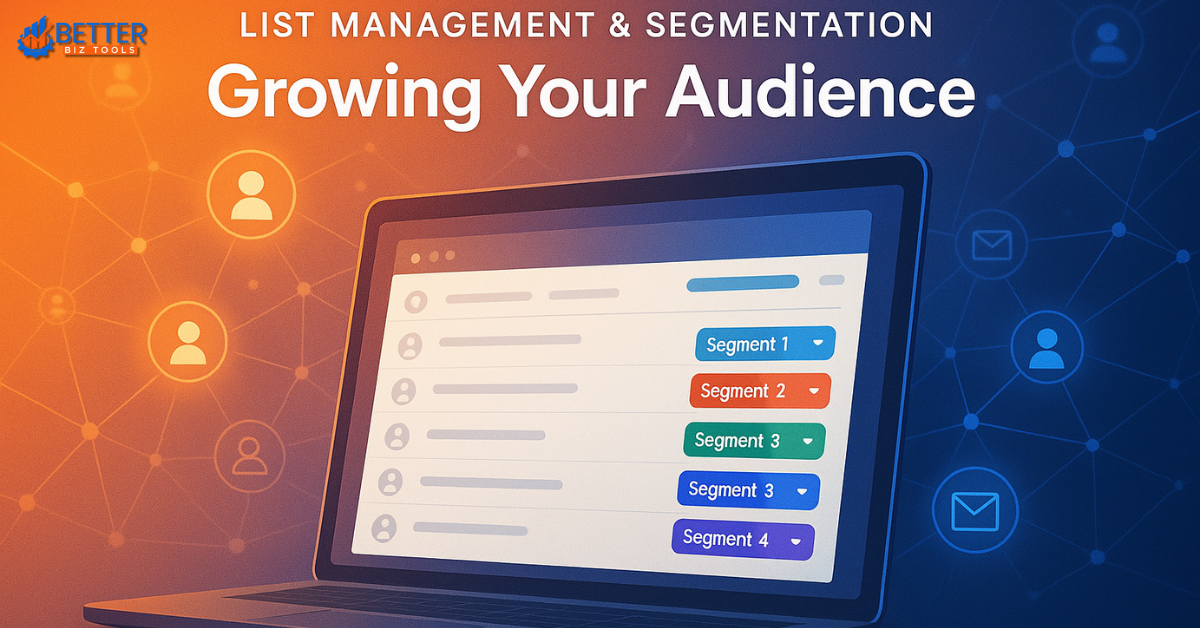
Good email marketing isn’t just blasting messages—it’s sending the right message to the right people. Here’s how mailchimp vs constant contact stack up.
Mailchimp
Mailchimp shines with advanced tools:
- Tags, groups, and advanced segmentation
You can slice and dice your list by purchase history, engagement level, location, and more. It’s powerful for tailoring messages. - Predictive demographics
Mailchimp can guess subscriber details like age and gender based on data patterns. It’s surprisingly accurate and helps personalize your campaigns. - Integrated CRM features
Mailchimp doubles as a lightweight customer relationship management system, helping you track interactions and preferences all in one place.
Constant Contact
Constant Contact keeps it simple:
- Easy-to-manage lists and tags
- Basic segmentation by opens, clicks, or simple profile info
For many small businesses, this simplicity is enough—and easier to handle than Mailchimp’s complexity.
Tip: Choose Mailchimp for deep segmentation. Pick Constant Contact if you prefer simple list management without the extra learning curve.
Integrations: How Well Do They Play With Other Tools?
This is one of the biggest hidden factors in the Mailchimp vs Constant Contact pricing debate because integrations save you time and money.
Constant Contact
- Offers 300+ native integrations and claims access to thousands more through platforms like Zapier and other third-party tools.
- Strong partnerships with local business tools like Mindbody and Eventbrite.
- Quick connections to Facebook, Instagram, and Google Ads.
Mailchimp
- Around 300+ native integrations.
- Deep e-commerce support with Shopify, WooCommerce.
- Advanced API options and thousands more integrations through Zapier and other middleware.
When I managed an e-commerce brand, Mailchimp’s Shopify integration was gold. But for a local dance studio, Constant Contact synced perfectly with their booking software.
Read Also: Email Marketing for Small Business: Tools & Tips 2025
Deliverability: Whose Emails Land In The Inbox?
It doesn’t matter how pretty your email looks if nobody sees it. So let’s talk mailchimp vs constant contact deliverability.
Mailchimp
- 91-97% deliverability in my experience
- Proactive warnings if you upload low-quality lists
- Smart send-time optimization helps avoid spam folders
Constant Contact
- Around 89-95% deliverability
- Simpler tools but reliable performance
- Less data on “why” emails bounce
My Deliverability Tip
- Clean your list regularly.
- Avoid spammy subject lines.
- Test on small segments first.
Between the two, Mailchimp edges out Constant Contact slightly on deliverability—but both are reputable.
Reporting & Analytics: Tracking Your Success
Data is how you turn emails into money.
Mailchimp
- Gorgeous, real-time dashboards
- Conversion tracking tied to revenue
- A/B testing for almost everything
I once tested two headlines on Mailchimp for a product launch. One subject line boosted open rates by 12%. Those insights pay for the subscription alone.
Constant Contact
- Simpler dashboards
- Good overview for beginners
- Not as many advanced insights
If you’re data-driven, mailchimp vs. constant contact is no contest — Mailchimp wins. But for simple reporting, Constant Contact is fine.
Mailchimp vs Constant Contact Pricing: What’s The Real Cost in 2025?

This is where it often gets messy.
Constant Contact Pricing vs Mailchimp
Constant Contact:
- Starts around $12/month for 500 contacts
- No free plan, but 60-day trial
- Costs rise quickly with list size
- Great for nonprofits (often discounted)
Mailchimp:
- Free plan forever (up to about 500 contacts but limited)
- Paid starts around $13/month
- More affordable for smaller lists
- Can get pricey for bigger lists or advanced features
Here’s a quick snapshot (approx. 2025 pricing):
| Contacts | Mailchimp | Constant Contact |
| 500 | Free–$13 | $12+ |
| 2,000 | $34–$60 | $45–$65 |
| 5,000 | $60–$100+ | $95–$125 |
My advice:
- For small lists, Mailchimp often costs less.
- For nonprofits, check Constant Contact’s discounts.
- Beware hidden costs (advanced templates, testing, automations).
Mailchimp vs Constant Contact: Best Choice by Industry
Because so many comparisons are generic, here’s a quick look at how these platforms really stack up in different industries—2025 style.
Local Service Businesses
Think gyms, plumbers, consultants, local shops. Constant Contact’s ease of use and broad local integrations often make it the simpler, more cost-effective choice.
E-commerce and Direct-to-Consumer Brands
Mailchimp’s advanced automation, behavioral triggers, and deep Shopify/WooCommerce integrations make it the clear winner here, especially for abandoned cart flows and multichannel campaigns.
Nonprofits and Event-Driven Organizations
Constant Contact’s beginner-friendly interface and nonprofit discounts shine for organizations focused on events and donor communications without a big marketing team.
Agencies and Advanced Marketers
Mailchimp’s powerful segmentation, reporting, and A/B testing provide the tools pros crave to optimize every campaign.
Ultimately, which is better constant contact or mailchimp? The real answer depends on how much you’ll use the advanced features.
What’s New in 2025? Features You Won’t Find in Old Comparisons
The email marketing world moves fast. When it comes to Mailchimp vs Constant Contact, 2025 brings some exciting updates that most older comparisons completely overlook — but you shouldn’t.
Mailchimp’s 2025 Power Moves
- AI-Powered Send-Time Optimization: Smart AI picks the perfect moment to send your emails, boosting open rates without extra effort.
- Multichannel Automation: Now you can build seamless customer journeys that combine email, SMS, and social ads — all from one place.
- Advanced Behavioral Triggers: More precise targeting based on user clicks, site visits, and past purchases than ever before.
Constant Contact’s 2025 Upgrades
- Streamlined Dashboard Redesign: The 2025 interface update makes campaign building faster and more intuitive — perfect for beginners.
- Expanded SMS Marketing: Small businesses can now easily add SMS to their email campaigns without complicated setups.
- Improved Local Business Integrations: New partnerships with popular booking and event platforms keep your marketing connected to the tools you already use.
Real-Life Case Study: My Campaign Results With Both Platforms
A few years back, I ran two similar campaigns that helped shape my perspective on Mailchimp vs Constant Contact:
- For an e-commerce brand, I used Mailchimp’s abandoned cart flow. Revenue from recovered carts was $4,700 in 3 weeks.
- For a nonprofit client, I used Constant Contact to send event invitations. Open rate was 47%, with dozens of attendees.
My verdict on Mailchimp vs Constant Contact:
- Mailchimp is unbeatable for advanced e-commerce and data-driven marketing.
- Constant Contact is a joy for smaller organizations needing something simple.
Conclusion
Choosing between mailchimp vs constant contact in 2025 boils down to one question: how complex do you want your email marketing to be?
- Want slick designs, powerful automations, and advanced reporting? Mailchimp’s your tool.
- Want something easy, supportive, and beginner-friendly? Constant Contact might be your new best friend.
Final Verdict: Still Not Sure About Mailchimp vs Constant Contact?
Here’s the bottom line:
- If you want powerful automations, data-driven insights, and serious e-commerce firepower, go with Mailchimp.
- If you want simplicity, guidance, and hands-on support for small business or nonprofit campaigns, start with Constant Contact.
Need help deciding?
Think about your goals, your tech comfort level, and how much time you’re willing to invest in learning the platform. Because the best email marketing tool isn’t the one with the most features — it’s the one you’ll use to grow your business.
Start small. Test both. See what clicks.
Whichever you choose, the most important thing is this: start sending. Your audience is already out there — your emails just need to show up.
FAQs About Mailchimp vs Constant Contact
+
+
+
+
+