
In 2025, an email platform does more than just help with marketing; it also helps with sales. It’s not as easy to choose between Klaviyo and Mailchimp anymore.
The best choice depends on how much control a business needs over its campaigns and what “value” really means for growth over the long term. This comparison goes beyond just looking at the surface-level features. It looks at pricing, Shopify’s limitations, and the strengths of automation to help you figure out which platform can really help you make sales instead of just sending emails.
Klaviyo vs Mailchimp: Quick Verdict
Klaviyo is the clear winner if you have an online store on Shopify, WooCommerce, or BigCommerce. It’s made for online shopping, with better segmentation, automation that focusses on products, and real-time data that helps turn browsers into buyers. Even its free plan has strong features that other platforms keep behind paywalls.
If you’re not interested in ecommerce, Mailchimp vs. Klaviyo gets more interesting. Mailchimp is a good option for people who make content, work for nonprofits, or just want an easy-to-use email tool without complicated automations. But it’s not good enough for ecommerce, especially when it comes to how much automation it has, how flexible its prices are, and how well it targets specific products to specific customers.
Here’s the bottom line:
| Feature Area | Winner | Why It Wins |
| Ecommerce Features | Klaviyo | Dynamic product blocks, smarter flows, deep Shopify integration |
| Email Editor UX | Mailchimp | Clean, fast dashboard that’s beginner-friendly |
| Segmentation & Targeting | Klaviyo | No limits on conditions, real-time segments |
| Pricing Transparency | Klaviyo | Simple pricing per contact — no list duplication fees |
| Integrations | Mailchimp | More 3rd-party tools like Canva, Vimeo, Google Analytics |
| Reporting & Analytics | Klaviyo (Free) | Predictive analytics even on free plan |
| Customer Support | Klaviyo | Better onboarding + more direct answers |
| Templates & Branding Tools | Mailchimp | Canva integration + auto-pulled brand kits |
Verdict:
- Klaviyo wins for ecommerce stores that want growth, automation, and revenue-first features.
- Mailchimp wins for creators, bloggers, and teams who want simplicity and broad use cases.
Pro Tip: Before making your decision, sign up for both free plans and test them with your actual store data. This hands-on approach will show you which platform feels more intuitive for your specific needs.
Klaviyo vs Mailchimp for Shopify: Which Works Better?
If you’re using Shopify, the choice between Klaviyo vs Mailchimp isn’t just about preference — it’s about compatibility, conversion, and control.
Shopify Integration: The Real Dealbreaker
Klaviyo was made for Shopify, so it works with it in a way that is native, seamless, and smart. Klaviyo automatically imports important information from a store once it is connected, such as:
- Customer purchase history
- Product views
- Cart activity
- Predicted next order date
- Lifetime value estimates
This data isn’t just for reporting; it also powers behavior-driven automation that leads to conversions. For instance, you can set up a custom email to go out to a customer who looked at a product several times but didn’t buy it, all without having to write any code or set up anything complicated.
Mailchimp’s integration with Shopify, on the other hand, has had some problems. Mailchimp was taken off the Shopify App Store after they broke up with Shopify in 2019. It came back later through third-party tools like ShopSync or Mailchimp for Shopify, making things harder and more complicated for users.
That “minor” difference can snowball into real headaches:
- Delayed data sync
- Missed or broken real-time automations
- Duplicate contacts clogging up lists
- Limited or inaccurate product recommendations
Ecommerce-First vs General Marketing
This is where the Klaviyo vs Mailchimp comparison really goes off the rails. Klaviyo is more than just an email tool; it’s a way to make money. You can add dynamic product blocks that change based on what someone looked at, left behind, or bought. It’s like giving your emails a brain for online shopping.
Mailchimp tries to keep up with similar features, but they don’t work very well. Product suggestions are more stable, and setting up advanced flows like back-in-stock alerts or price-drop emails often requires workarounds or pricey tiers.
Shopify App Store Ratings (2025)
- Klaviyo for Shopify: ★ 4.1 / 5
- Mailchimp for Shopify (via connector): ★ 3.3 / 5
And those ratings say it all. In the Mailchimp vs Klaviyo debate, real users consistently highlight smoother automation, more accurate tracking, and better ROI when using Klaviyo with Shopify.
Action Step: If you’re already on Shopify, check out Klaviyo’s native integration in the App Store. The setup takes less than 5 minutes, and you’ll immediately see the data sync quality difference.
Klaviyo vs Mailchimp Pricing: What’s the Real Cost?
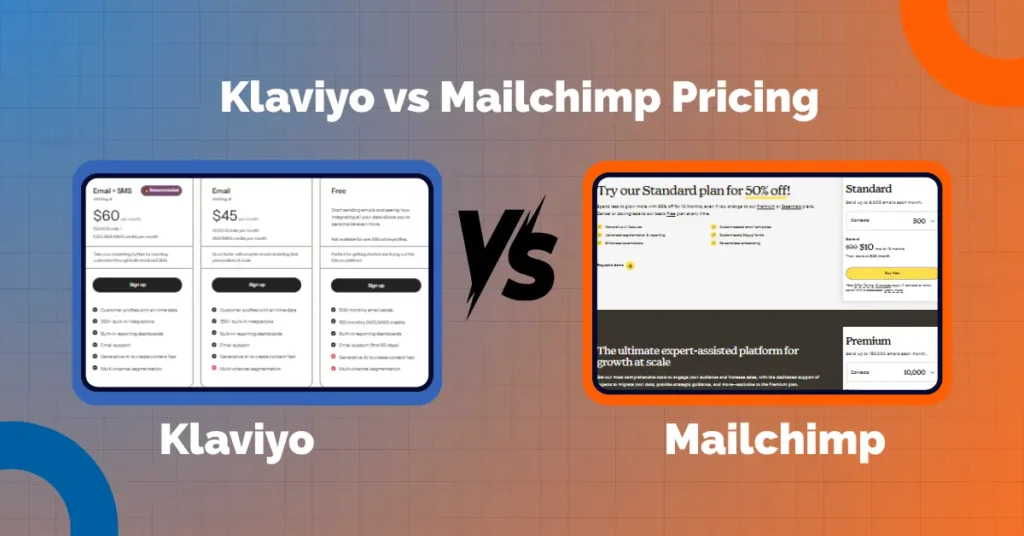
It’s easy to get sidetracked by free plans and fancy tier names when you compare Klaviyo and Mailchimp. The real question is how much each platform costs and what features are behind paywalls.
How You’re Charged: One Contact or Three?
This is an important difference. Mailchimp keeps track of all the contacts in all of its lists. If the same person shows up in three different groups, you are paying for them three times.
Klaviyo makes things easier by charging one contact for each list or segment they belong to. This means that advanced targeting and granular segmentation won’t cost you more.
What effect? Big savings, especially as your subscriber base grows and your campaigns get more complicated. For businesses that are growing, picking the right pricing model can make a big difference.
Free Plans Compared (as of 2025)
| Feature | Klaviyo Free Plan | Mailchimp Free Plan |
| Max Contacts | 500 | 500 |
| Monthly Email Sends | 5,000 | 1,000 |
| Access to Automation | Yes, full flows | Limited / No Journeys |
| Predictive Analytics | Included | Not available |
| Abandoned Cart Emails | Included after store sync | Paid only |
| Support Duration | 60 days of email/chat | 30 days of email only |
Mailchimp looks generous at first glance — until you realize almost everything you actually need is paywalled.
Klaviyo still lets you test advanced ecommerce flows even on free.
Tip: Klaviyo’s free plan is like a full trial for small stores that are just getting started, not a bait-and-switch. You have time to build, test, and grow before you have to pay.
Mid-Tier Pricing (1,500 Contacts)
| Platform | Plan | Monthly Cost (Email Only) |
| Klaviyo | Email Plan | $45 |
| Mailchimp | Essentials | $26.50 |
| Mailchimp | Standard (needed for automation) | $45 |
Mailchimp’s lower-tier plan looks cheaper — but lacks automation. If you need ecommerce automation (like abandoned cart, winback, etc.), you’ll need Standard, which puts the cost on par with Klaviyo.
Email Editor & Design Tools: Simplicity vs Flexibility
Mailchimp shines when it comes to simplicity. Its drag-and-drop builder is intuitive, fast, and great for beginners. You can launch polished campaigns in under 10 minutes — no design skills needed.
Klaviyo takes a more structured approach. It asks for campaign setup details upfront, which adds friction but helps with organization and scalability later.
Design & Content Blocks
Both platforms offer:
- Responsive previews (desktop/mobile)
- Drag-and-drop layouts
- Content blocks for text, images, buttons, and products
Mailchimp gives you:
- Polished, pre-built blocks (e.g., surveys, review requests, videos)
- Quick-start templates that feel modern and ready to go
Klaviyo gives you:
- Ecommerce-specific blocks (like dynamic product recommendations)
- Revenue attribution built into the editor — if your store is integrated
Branding & Templates
Mailchimp’s Creative Assistant auto-pulls your brand assets from your site — colors, logos, and fonts — with minimal setup.
Klaviyo requires manual branding setup, but once saved, it applies branding consistently across all campaigns and flows — something Mailchimp doesn’t always do by default.
Real-World Take
Mailchimp is ideal for teams who want to get emails out quickly, especially for newsletters or non-ecommerce brands.
But for stores focused on conversions, Klaviyo offers deeper customization, smarter product features, and long-term advantages. Most brands that switch don’t go back.
Automation Showdown: Klaviyo vs Mailchimp Who Does Smarter Marketing?
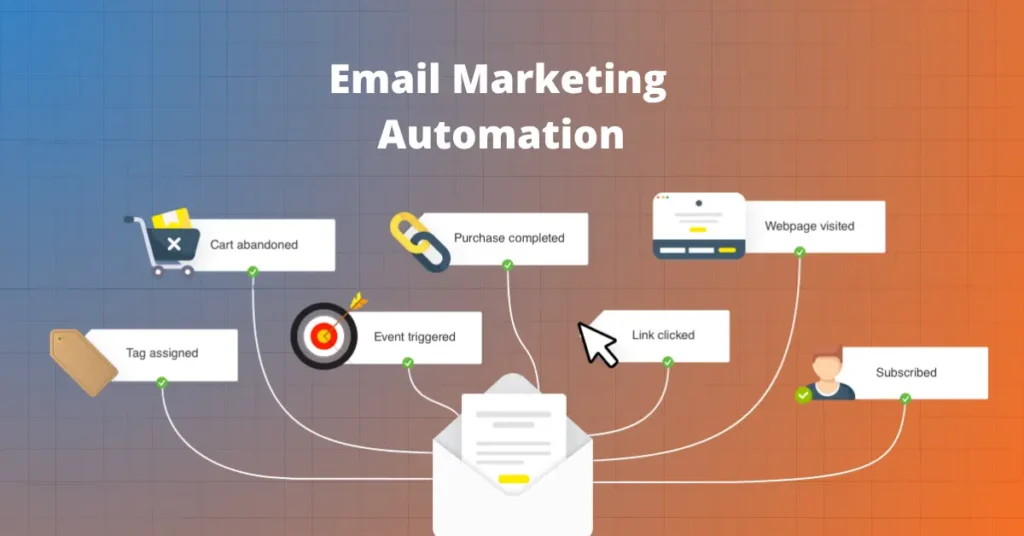
When it comes to automation, both Klaviyo vs Mailchimp offer impressive toolkits — but the difference lies in depth and intent.
Mailchimp calls its workflows “Journeys.” They’re clean, visual, and beginner-friendly. You can build flows like:
- Welcome series
- Abandoned cart reminders
- Re-engagement emails
- Product retargeting (on paid plans)
The drag-and-drop builder is flexible, and adding logic like “if/then” conditions is pretty straightforward. But here’s the catch — most of these features are locked behind the Standard Plan. That means to build serious ecommerce flows, you’ll need to upgrade.
Klaviyo, on the other hand, offers over 70+ ecommerce-focused flow templates out of the box.
These include:
- Abandoned checkout flows
- Post-purchase thank you series
- Back-in-stock notifications
- Product-specific upsell or winback flows
Plus, its automation engine is powered by real-time behavior and predictive analytics. You can set emails to trigger based on browsing history, purchase frequency, or even churn risk.
It’s not just automation — it’s intelligent, revenue-driven marketing.
A real-world example? I helped an apparel brand set up a Klaviyo flow that targeted customers likely to reorder within 7 days. The conversion rate on those emails? Over 9%. With Mailchimp, we couldn’t have triggered that based on predicted timing without a manual workaround.
- Winner: Klaviyo — it’s built for ecommerce lifecycles and does the heavy lifting behind the scenes.
- Automation Challenge: Set up a simple abandoned cart flow in both platforms (using their free trials) and compare the setup process. You’ll quickly see which one feels more intuitive for your workflow.
Does Mailchimp Have a Teaser Like Klaviyo?
One of Klaviyo’s best features is its “teaser” function, which lets you make pre-made email pop-ups or small previews to get visitors’ attention before they fully subscribe. These teasers help get more people to sign up and get people who are on the fence to do so, which is something that many e-commerce and SaaS businesses love.
Klaviyo has a “teaser” feature that Mailchimp doesn’t have. Mailchimp has basic pop-up forms and landing pages, but it doesn’t have the advanced behavioural triggers and design options that make Klaviyo’s teasers so effective.
In the ongoing debate between Klaviyo and Mailchimp, this feature alone makes a strong case for choosing Klaviyo if getting leads and keeping them on your site are the most important things.
Why Is Klaviyo Better Than Mailchimp?
When comparing Mailchimp and Klaviyo, a lot of marketers say that Klaviyo has a better set of tools, especially for businesses that sell things online or offer software as a service.
Here’s why Klaviyo often comes out on top:
- Advanced segmentation and automation: Klaviyo allows you to build highly personalized flows based on customer behavior, purchase history, and engagement level.
- Better integration with e-commerce platforms: Klaviyo connects seamlessly with Shopify, WooCommerce, and other major platforms, giving you deeper customer insights and better sales-focused email strategies.
- Powerful analytics: Detailed reporting and predictive analytics help you understand and optimize every campaign.
Klaviyo has more advanced features for growing businesses, but Mailchimp is easier to use and better for beginners. That’s why Klaviyo is often the choice for growing brands that need more data and automation power when people talk about Klaviyo vs. Mailchimp.
There are other companies that compete with Klaviyo, such as Omnisend, Drip, and ActiveCampaign. However, Klaviyo is still the best choice for businesses that want personalised and revenue-focused email marketing.
Segmentation & Contact Management
Targeting the right customer at the right time isn’t optional anymore — it’s table stakes.
This is another area where Klaviyo pulls ahead, especially for stores with multiple product lines or customer types.
Klaviyo’s segmentation is:
- Real-time
- Unlimited condition-based
- Behavior-driven
You can build a segment like: “Women who bought skincare in the past 60 days, spent over $80, and haven’t opened the last 3 emails.”
That kind of targeting can skyrocket your ROI.
Mailchimp also has segmentation, but it’s limited by plan and complexity. Their Standard Plan allows up to 5 conditions per segment, and segments update slower.
There’s also the contact counting issue we discussed earlier: with Mailchimp, putting the same person into different audiences increases your cost. Klaviyo keeps it simple — one contact, one charge.
Plus, Klaviyo gives you pre-built smart segments like:
- Engaged vs. inactive users
- High-LTV customers
- Predictive churn groups
That’s not just helpful — it’s actionable.
Winner: Klaviyo. It treats customer data like gold, and it gives you the tools to act on it instantly.
Segmentation Tip: Learn advanced segmentation strategies from Klaviyo’s own blog — they regularly share case studies and best practices from successful ecommerce brands.
Analytics & Reporting Comparison
Reports are only useful if they give you information that you can use. What are the differences between Mailchimp and Klaviyo in this area?
When a store is connected, Mailchimp sends clean email performance reports that show how many people opened, clicked, bounced, and made a purchase. Integrations let users see visual dashboards, compare campaigns, and get reports on social media. But a lot of the advanced reporting features are only available on Standard or Premium plans.
Klaviyo stands out because even its free plan comes with full reporting tools, like predictive analytics, that let teams make decisions based on data without having to pay extra.
You get:
- Revenue per recipient (RPR)
- Conversion and AOV tracking
- Smart dashboards you can customize
- Real-time metrics across flows
- Churn prediction and CLV forecasting
One of my favorite features is the ability to tag sales directly to individual campaigns — no guessing which emails actually drove revenue.
And if something goes wrong — like high bounce rates — you can set automated alerts.
Winner: Klaviyo, especially if you’re focused on performance, testing, and scaling campaigns based on data.
Analytics Pro Tip: Set up Google Analytics 4 alongside your email platform to get a complete view of your customer journey from email click to purchase.
Integrations & Ecosystem
Klaviyo vs Mailchimp Both platforms offer 300+ integrations, covering ecommerce, analytics, design, payment, and CRM.
But the type of integrations matters.
Mailchimp shines in mainstream app partnerships. It connects with:
- Google Analytics
- Canva
- Vimeo
- QuickBooks
- Facebook, Instagram, and LinkedIn Ads
This is perfect if you’re running a content-heavy brand or need a wider digital marketing stack.
Klaviyo, on the other hand, is focused tightly on ecommerce and growth. It integrates deeply with:
- Shopify
- WooCommerce
- BigCommerce
- ReCharge (subscriptions)
- Gorgias (support automation)
- Reviews.io, Yotpo (for UGC triggers)
It’s not just about syncing — Klaviyo uses this data to personalize every campaign and flow.
If your marketing stack relies heavily on sales triggers, UGC, and retention — Klaviyo’s ecosystem will feel purpose-built.
Winner: Tie — Mailchimp is better for broad marketing teams, Klaviyo is better for ecommerce ecosystems.
Integration Advice: Before choosing between Klaviyo vs Mailchimp, audit your current tech stack. List all the tools you use and check which platform offers native integrations vs. third-party connectors.
Customer Support: What Happens When You Need Help
This is where Klaviyo and Mailchimp start to differ in terms of experience and support.
With the free plan, Klaviyo offers 60 days of live chat and email support, which is useful. Support agents do more than just link to help docs. I got real advice on how to use segment logic and A/B testing from my own experience.
Mailchimp only gives you email support for 30 days on free plans. After that, you have to talk to a chatbot that doesn’t always work.
This is the main difference:
- Klaviyo can help you with specific ecommerce questions like “how do I trigger this based on cart value?”
Mailchimp usually sends back general help articles unless you pay for a higher plan. - Klaviyo consistently gets higher ratings for customer support on Trustpilot and the Shopify App Store, especially for growing online stores.
Klaviyo is the winner because it has better support, more in-depth responses, and real ecommerce advice.
Before you need help, save the knowledge bases for both platforms: Klaviyo Academy and Mailchimp’s Help Centre. Learning on your own can save you time.
User Reviews & Market Reputation About Klaviyo vs Mailchimp
It’s one thing to look at features in Mailchimp vs Klaviyo. It’s another to ask: What are actual users saying?
Here’s a quick glance at recent (2024–2025) reviews:
Klaviyo – What Users Like:
- Seamless ecommerce integration
- High ROI through smart flows
- Transparent billing
- Real-time segment updates
Klaviyo – Complaints:
- Interface is a bit clunky for beginners
- Steeper learning curve
- Occasional bugs with campaign scheduling
Mailchimp – What Users Like:
- Clean interface
- Great for newsletters and nonprofits
- Easy-to-learn for beginners
Mailchimp – Complaints:
- Feature gating — even after upgrade
- Frustrating contact counting
- Account suspension without warning
- Lower email deliverability (reported by some users)
Trustpilot scores (as of 2025):
- Klaviyo: 4.0 / 5
- Mailchimp: 1.4 / 5
That’s a pretty clear signal.
Winner: Klaviyo — it’s not perfect, but customers trust it more, especially ecommerce teams.
Research Tip: Check G2 reviews for both platforms, filtered by company size and industry similar to yours. Real user experiences matter more than feature lists.
Final Verdict: Klaviyo vs Mailchimp in 2025?
So where do we land in the Mailchimp vs Klaviyo debate for 2025?
If you’re running an ecommerce brand and want to sell more, automate better, and personalize like a pro, Klaviyo is the better choice — hands down.
It’s built to grow with your business. The segmentation is deeper, the reporting is sharper, and the free plan is actually useful for testing and scaling.
If you’re running a blog, a local service, or a nonprofit? Mailchimp could work just fine. It’s beginner-friendly, integrates with mainstream tools, and the interface is hard to beat.
But for ecommerce? Klaviyo wins — because it’s not just about sending emails. It’s about driving revenue.
Ready to Get Started?
Try Klaviyo’s free plan → Sign up here (no credit card required)
Need a Shopify store first? → Start your free trial
Want to compare side-by-side? → Test both platforms with the same email list for 2 weeks and let the results decide.
FAQs: Klaviyo vs Mailchimp
+
+
+
+
+