Agile methods help teams deliver work faster, reduce delays, and manage changing requirements. Many teams compare Kanban vs Scrum when building an Agile workflow that fits their structure. Software development teams, IT departments, product teams, and marketing groups rely on these frameworks to manage work with clarity and speed.
Readers searching for Scrum vs Kanban want a clear comparison that guides decision-making. They want to know which framework improves delivery, supports team capacity, and prevents bottlenecks. They also want practical guidance they can apply to their projects.
You will notice that workflow design affects how smoothly your team delivers work. This article walks you through Kanban and Scrum, explains the differences, and shows how each method works in real project environments.
Table of Contents
ToggleWhat Is the Difference Between Scrum and Kanban?
Quick Comparison Table
| Aspect | Scrum | Kanban |
| Workflow Style | Fixed-length sprints | Continuous flow |
| Team Roles | Required roles (Scrum Master, Product Owner, Dev Team) | No mandatory roles |
| Planning Approach | Work planned per sprint | Work pulled continuously |
| Work Limits | Limited by sprint capacity | Limited by WIP (Work in Progress) limits |
| Meetings | Defined ceremonies (standup, sprint planning, review, retrospective) | No required ceremonies |
| Delivery Style | Predictable cycle-based delivery | Continuous improvement and ongoing delivery |
Scrum is a sprint-based Agile framework with structured roles, while Kanban is a flexible, flow-driven method focused on continuous delivery and WIP limits.
What Is Scrum?
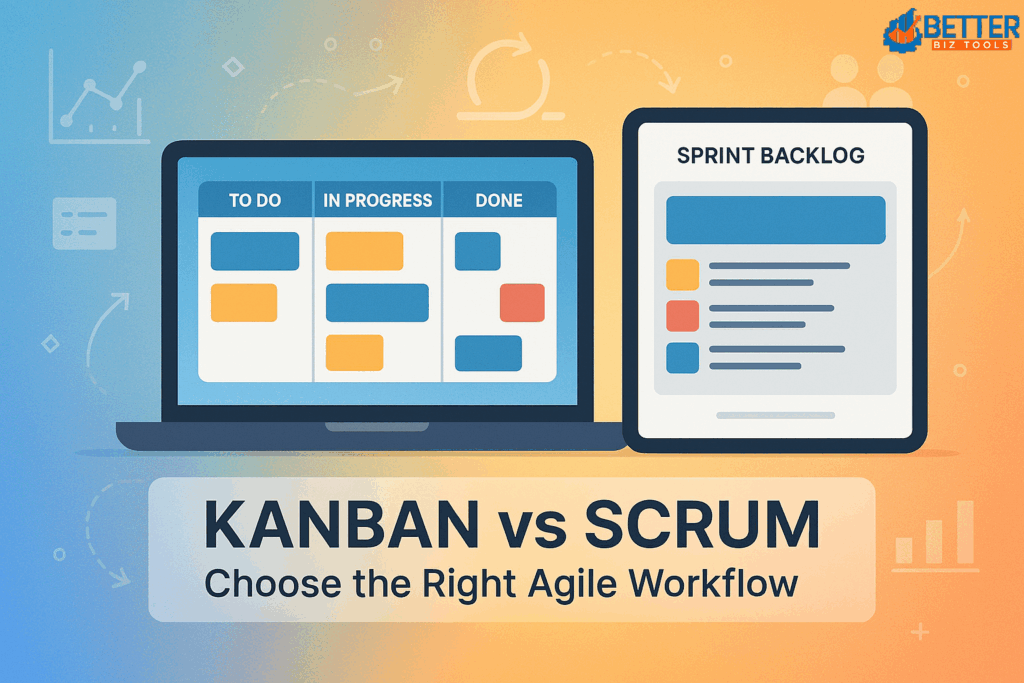
Scrum is an Agile framework built around roles, sprints, and recurring events. Key entities include the Scrum Master, Product Owner, and Development Team. Teams manage work through a sprint backlog and deliver a usable product increment at the end of each cycle.
How Scrum Works
Scrum teams follow a consistent rhythm:
- Sprint planning
- Daily standup
- Work execution
- Sprint review
- Retrospective
Each sprint lasts one to four weeks. Teams commit to a sprint goal and focus on predictable delivery. Velocity helps teams estimate future capacity.
When to Use Scrum
Scrum is best when your team needs:
- Structured workflows
- Clear accountability
- Predictable cycles
- Regular feedback loops
- Defined roles
Scrum fits complex software development projects that evolve during production.
What Is Kanban?
Kanban focuses on visualizing work and improving flow. Key concepts include cycle time, throughput, WIP limits, and bottleneck detection. This method helps teams act on real-time data instead of fixed plans.
How Kanban Works
Kanban uses cards to represent tasks and columns to show workflow stages. The team sets work-in-progress limits to prevent overload. This approach increases clarity and reduces waiting time.
Kanban has no sprint commitments and no required roles. Work moves forward when capacity is free.
When to Use Kanban
Choose Kanban when your team has:
- Constant task changes
- Ongoing requests
- Fast-moving priorities
- Work that arrives unpredictably
- Support or operations functions
It is common in IT support, DevOps, marketing, and service teams.
Kanban vs Scrum: Head-to-Head Comparison
Workflow Structure
- Scrum works in fixed-length sprints
- Kanban supports continuous flow
Scrum controls work by time. Kanban controls work by capacity.
Roles and Responsibilities
Scrum requires:
- Scrum Master
- Product Owner
- Development Team
Kanban has no required roles. Teams can adopt roles based on need.
Planning and Flexibility
- Scrum uses sprint goals and strict planning.
- Kanban updates tasks at any moment based on availability.
Metrics and Reporting
Scrum uses:
- Velocity
- Burndown charts
- Sprint progress
Kanban uses:
- Cycle time
- Throughput
- Flow efficiency
Each method offers a different view of performance.
Tools and Integrations
Both frameworks are supported by tools like:
- Jira
- Trello
- Asana
- Monday.com
Jira remains one of the most used platforms for Agile teams. Learn more in our Jira Agile Project Management Guide for Teams.
Kanban vs Scrum Pros and Cons
Scrum Pros
- Strong structure
- Predictable delivery
- Clear team roles
- Helpful for complex projects
Scrum Cons
- Frequent meetings
- Less flexible for fast-changing work
Kanban Pros
- High flexibility
- Easy to learn
- Supports continuous delivery
- Helps identify bottlenecks quickly
Kanban Cons
- Less predictable timelines
- Needs discipline to manage WIP limits
Kanban vs Agile vs Scrum — How They Are Connected
Agile is the larger framework based on values, collaboration, and adaptive planning.
Scrum is one method under the Agile umbrella. Kanban is also Agile-friendly but does not follow defined ceremonies.
Many teams compare agile kanban vs scrum when selecting a workflow that supports team culture and project needs.
Scrum and Kanban in Real Life
1. Software Development Team Using Scrum
A development team working on mobile features uses two-week sprints. They hold daily standups, commit to sprint goals, and use velocity to plan future work. The structure helps avoid mid-sprint changes and reduces rework.
2. DevOps Team Using Kanban
A DevOps team receives requests throughout the day. Kanban helps them track tasks, see bottlenecks, and manage flow. They measure cycle time to reduce delays and improve response time.
3. Hybrid Approach: Scrumban
Some teams combine both methods. Scrumban uses Kanban flow with light sprint planning. It helps teams with unpredictable workloads while maintaining some structure.
Tools That Support Kanban and Scrum
Jira
Jira supports Agile teams with many features:
- Scrum boards
- Kanban boards
- Custom workflows
- Reporting tools
It also integrates with Confluence and Bitbucket for full project tracking.
Trello
Trello is a simple Kanban tool that works well for smaller teams and non-technical work.
Asana, Monday.com, ClickUp
These tools support both methods and add automation, dashboards, and team collaboration features.
For a complete list of top options, check out our Best Agile Project Management Software guide.
How to Choose Between Kanban or Scrum
Use Scrum If Your Team Needs
- Defined roles
- Predictable cycles
- Structured planning
- Regular evaluation events
Use Kanban If Your Team Needs
- Flexibility
- Continuous flow
- Faster task switching
- Fewer meetings
Checklist for Decision-Making
Ask these questions:
- How complex is the project
- How steady is the work arrival rate
- Does the team need strict structure
- How fast does work change
- Do stakeholders expect fixed delivery cycles
These answers help guide the selection.
Which Agile Method Is Right for You
Scrum and Kanban are both powerful Agile frameworks, but they support different types of work.
- Scrum is best when teams need structured sprints, defined roles, and predictable delivery cycles.
- Kanban is ideal when flexibility, continuous flow, and real-time updates matter most.
Choosing the right method depends on your team’s workload patterns, collaboration style, and project expectations.
For more expert insights and practical tools, explore guides on BetterBizTools.
To streamline your workflows, Download our Free Business Toolkit for templates, planning sheets, and ready-to-use project frameworks.
Follow BetterBizTools:
Facebook | LinkedIn | Instagram | Pinterest
FAQs
+
+
+
+
+
+
+
+
+