Choosing the right project method is one of the most important decisions you make as a team. The way you plan, execute, and deliver work affects timelines, resources, and overall success. The Agile vs Waterfall discussion continues to be one of the most common debates in project management. Both methods have clear strengths, and the best choice depends on your project type, requirements, and team structure.
This guide explains the differences between Agile and Waterfall, compares them across practical factors, and helps you decide which method fits your workflow.
Table of Contents
ToggleWhat Is Waterfall Project Management?
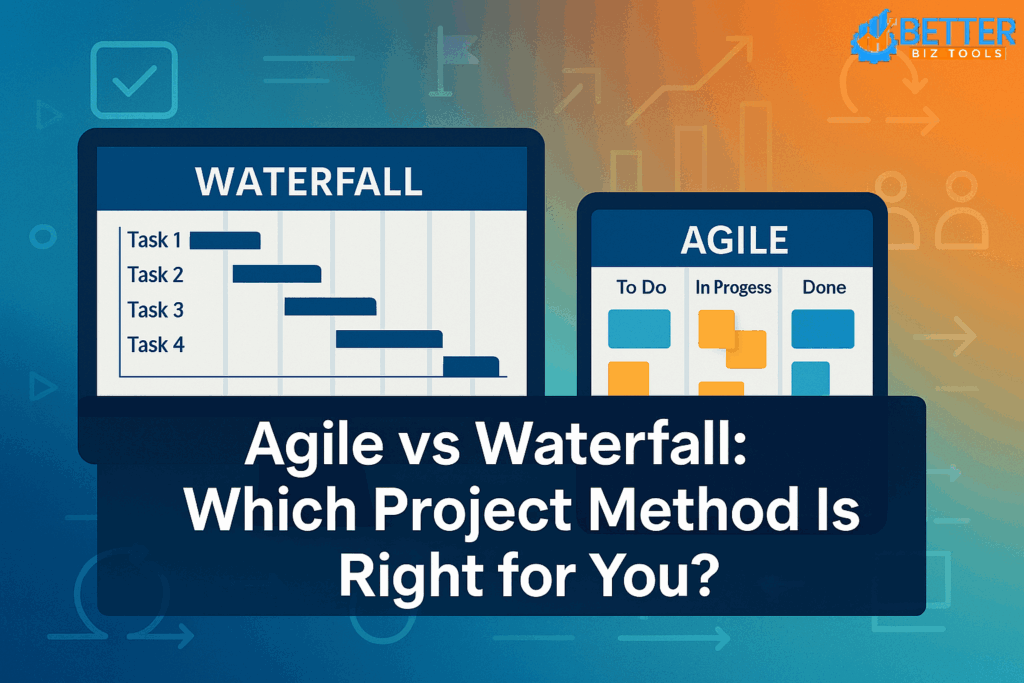
Waterfall project management follows a linear and structured path. Tasks flow in one direction. Once a phase is complete, you move to the next without returning to earlier stages. This method works well when project requirements are known in advance.
To explore other traditional and modern project approaches, you can also check out different project management styles.
Key characteristics
- A clear project scope at the beginning
- Sequential phases such as Requirements, Design, Development, Testing, and Deployment
- Strong documentation at every stage
- Predictable timelines and budgets
Best suited for
- Construction
- Manufacturing
- Hardware development
- Compliance-driven industries
- Projects with fixed requirements
Waterfall project management gives teams clarity early on. When changes are minimal, the method works smoothly from start to finish.
What Is Agile Project Management?
Agile project management is based on iteration and flexibility. Work is divided into smaller cycles called sprints. Teams deliver small increments and adjust plans based on feedback.
Key characteristics
- Fast, iterative delivery
- Ongoing customer involvement
- Constant improvement
- Adaptability when requirements change
- Lightweight documentation
Best suited for
- Software development
- Digital products
- Startups
- Projects with evolving requirements
If you want tools that support Agile well, check out this list of the Best Agile Project Management Software.
Waterfall vs Agile Project Management: Key Differences
The comparison below highlights how each method operates across important project factors.
| Factor | Waterfall | Agile |
| Structure | Sequential | Iterative |
| Flexibility | Low | High |
| Documentation | Heavy | Minimal |
| Delivery | End of project | Incremental |
| Risk Management | Predictive | Adaptive |
| Customer Involvement | Low | High |
| Best For | Stable requirements | Evolving requirements |
This breakdown shows why software development Agile vs Waterfall decisions often depend on how quickly requirements can change.
Agile vs Waterfall vs Scrum: How Scrum Fits In
Many teams confuse Scrum with Agile. Scrum is a framework within Agile, not a separate method. It provides structure through sprints, stand-ups, backlogs, and sprint reviews.
Agile vs Waterfall vs Scrum explained
- Waterfall: Follows a fixed plan from start to finish
- Agile: Focuses on flexibility and continuous delivery
- Scrum: A structured Agile framework using time-boxed sprints
Scrum works best when teams need consistent delivery and close collaboration.
When to Use Waterfall
Waterfall is effective in situations where stability is more important than speed. You should consider Waterfall when:
- Requirements are finalized at the start
- Stakeholder feedback happens at major milestones
- You need predictable budgets and timelines
- The project cannot support frequent changes
- Work requires detailed documentation
Examples
- Building infrastructure
- Developing physical products
- Large ERP implementations
Waterfall removes uncertainty for projects that follow a strict process.
When to Use Agile
Agile is the preferred choice when flexibility, adaptation, and speed are essential. It allows teams to adjust requirements, test ideas early, and deliver work in incremental cycles.
Choose Agile when:
- Requirements may change throughout the project
- You want to test ideas early
- Development needs quick releases
- Teams prefer regular feedback
- Collaboration is ongoing
Examples
- Mobile app development
- Cloud service platforms
- UX and UI improvement projects
- Startups testing product ideas
Both Agile and Waterfall create value, but Agile is more effective in environments where requirements evolve frequently. If your team uses Jira for Agile workflows, you can learn more in our guide on Jira Agile Project Management.
Agile vs Waterfall for Software Development
Software teams often compare Agile vs Waterfall because both influence product quality, delivery speed, and team workflow.
How each method affects development
Agile
- Faster release cycles
- Early identification of issues
- Strong customer involvement
- Better team collaboration
Waterfall
- Clear scope before development
- Predictable delivery schedule
- Easier tracking for fixed requirements
- Strong documentation trail
Most modern software teams choose Agile because product requirements change frequently.
Can Agile and Waterfall Work Together?
Some organizations use a hybrid model that blends both methods. This is often called Water-Agile-Fall.
How hybrid models help
Waterfall for planning and approvals
Leadership defines scope, budget, risks, and milestones in a structured Waterfall format before work begins.Agile for execution and delivery
Development teams break the approved plan into sprints, release work in iterations, and adjust based on feedback.Reduced risk through controlled flexibility
The high-level plan stays fixed, while Agile teams adapt tasks and features along the way.Improved communication across teams
Stakeholders get predictable updates from Waterfall planning while Agile teams maintain continuous progress.
This approach works well in large enterprises where executives, compliance teams, or PMOs require strict documentation, but engineering or product teams need Agile to deliver frequent updates and faster iterations.
Choosing the Right Method: Practical Decision Checklist
Use the questions below to guide your choice.
Choose Waterfall if
- Requirements are fixed
- Documentation is essential
- The project cannot change once started
- Stakeholders prefer a clear timeline
Choose Agile if
- Requirements may change
- The team wants fast delivery
- The project benefits from regular feedback
- Frequent updates improve the product
This checklist helps you match your process to your project needs.
👉 Download our Free Business Toolkit for templates, checklists, and planning resources that make it easier to apply Agile or Waterfall effectivel.
Expert Recommendations
Project management experts agree that Agile and Waterfall are effective when used in the right context. The method should fit your team’s maturity, project constraints, and expected results. These recommendations come from industry research, consulting experience, and real project outcomes across software, construction, and enterprise IT.
Key Recommendations from Experts
1. Train teams before switching methodologies
Teams that receive structured onboarding and role-based training adapt faster.
- Agile coaches recommend at least 2–4 weeks of sprint-based practice before moving a full project to Agile.
- Waterfall teams benefit from detailed requirement-writing and documentation workshops.
2. Select tools that support the methodology rather than forcing a fit
Tools shape behavior. Mismatched tools slow teams down.
- Agile teams perform better with sprint boards, backlog management, and automation.
- Waterfall teams need dependency tracking, Gantt charts, and milestone planning.
3. Define metrics early and track them consistently
Clear KPIs help identify whether Agile or Waterfall is delivering better performance.
Examples of metrics used by successful teams:
- Agile: sprint velocity, cycle time, burndown progress
- Waterfall: variance in timeline, cost deviation, milestone completion rate
Organizations that track metrics from the start report fewer delays and more predictable outcomes.
4. Avoid unnecessary complexity
Many teams fail by mixing Agile and Waterfall without structure.
Experts recommend:
- Keep workflows simple
- Limit tool overload
- Establish a consistent review cadence
Hybrid teams should follow a defined process rather than creating new rules for every project.
5. Assign roles clearly to prevent delays
Role confusion is one of the top causes of failed projects.
- Agile requires dedicated roles like Product Owner and Scrum Master.
- Waterfall needs strong project leads, requirement analysts, and QA managers.
Teams with clear responsibilities complete projects faster with fewer handoff errors.
Popular Tools Recommended by Experts
- Jira – Best for Agile teams using sprints, backlogs, and iterative delivery
- Trello – Good for hybrid models that need simple, visual boards
- Asana – Effective for teams focused on basic workflows and collaboration
- Microsoft Project – Ideal for Waterfall projects requiring Gantt scheduling and cost forecasting
Consultants agree that the method you choose should align with your team’s skills, the complexity of the project, and how frequently requirements change. A disciplined process backed by the right tools leads to better outcomes regardless of methodology.
Final Thoughts and Next Steps
The Agile vs Waterfall comparison is not about declaring a winner. Each methodology serves different project types. Agile fits teams needing flexibility and iterative improvement, while Waterfall works best for projects with clear plans and predictable outcomes.
Assess your project scope, team setup, and timelines, then select the method that aligns with your goals.
👉 Download our Free Business Toolkit here to access templates, checklists, and expert resources for better project planning and execution.
For more guides on project management methods, productivity tools, and software comparisons, explore resources on BetterBizTools.
Stay connected for ongoing productivity tips and insights:
Start improving your workflows today — the next successful project begins with the right strategy and tools.
FAQs
+
+
+
+
+