Every successful project starts with a clear structure, adaptable methods, and strong leadership. These principles define project management styles used across modern organizations. Each style represents a unique approach to planning, executing, and completing projects efficiently.
Understanding your project management style helps align team goals, manage timelines, and improve communication. Whether your focus is innovation, structure, or speed, project management places a premium on clarity and adaptability.
This article explores the seven main types of project management styles, explaining what they are, when to use them, and how to choose the best fit for your team or organization.
What Is a Project Management Style?
A project management style defines how a project manager leads, plans, and executes work. It covers the processes, tools, and communication methods used to guide a project from start to finish.
Your style of project management depends on your team’s structure, the type of work involved, and how flexible you need to be. Choosing what is your project management style helps improve efficiency and predictability across projects.
Different styles of project management such as Agile, Waterfall, Lean, or Kanban offer structured ways to organize resources and meet deadlines while balancing collaboration and control.
Why Project Management Styles Matter
The right project management style impacts how well teams collaborate, handle risks, and achieve goals. When teams follow a structured approach, communication improves, and tasks are completed with fewer delays.
Different styles project management frameworks suit different needs. For instance, Agile works best in fast-paced environments, while Waterfall fits long-term, sequential projects.
Methods like Scrum, Kanban, and Lean have gained popularity because they adapt to changing demands. Choosing what is your project management style determines how effectively your team responds to challenges and maintains quality under pressure.
The 7 Main Types of Project Management Styles
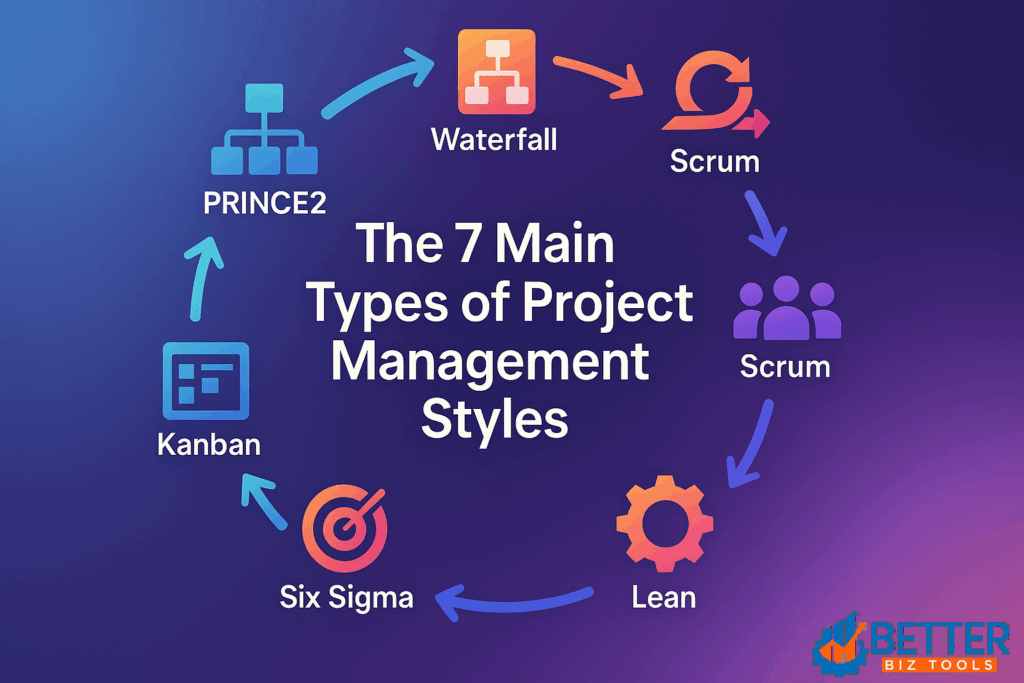
Each type of project management style offers distinct advantages depending on your project’s goals and structure. Let’s explore them one by one.
1. Waterfall Project Management Style
The Waterfall style project management approach is the most traditional method. It follows a linear, step-by-step process where each stage must be completed before moving to the next.
Key Features:
- Sequential planning and execution
- Clearly defined requirements and deliverables
- Strong emphasis on documentation
Best for: Construction, engineering, and software projects with fixed timelines and budgets.
This traditional project management style ensures control but limits flexibility if requirements change midway.
2. Agile Project Management Style
The Agile project management style focuses on adaptability and continuous improvement. Instead of rigid steps, Agile divides projects into smaller cycles known as sprints.
Key Features:
- Flexible planning and iterative progress
- Strong collaboration between teams and stakeholders
- Regular feedback and quick adjustments
Best for: Software development, marketing campaigns, or projects with evolving requirements.
This agile style project management approach allows teams to deliver value faster while adapting to new challenges.
3. Scrum Project Management Style
Scrum is a framework within Agile, offering more structure through defined roles and meetings.
Key Features:
- Short sprints (1–4 weeks) with specific deliverables
- Roles include Scrum Master and Product Owner
- Daily stand-ups for accountability
Best for: Teams that value transparency and iterative delivery.
Scrum enhances collaboration and ensures consistent progress through regular evaluation.
4. Kanban Project Management Style
The Kanban methodology is a visual system that manages workflow and reduces bottlenecks. Tasks are organized on a Kanban board using columns like To Do, In Progress, and Done.
Key Features:
- Continuous delivery
- Work-in-progress limits
- Emphasis on efficiency and transparency
Best for: Teams needing constant output such as operations or maintenance.
Kanban focuses on visualizing work and improving process flow without overloading resources.
5. Lean Project Management Style
The Lean project management style centers on delivering maximum value with minimal waste. It emphasizes efficiency and continuous improvement.
Key Features:
- Focus on customer value
- Elimination of non-essential tasks
- Data-driven process optimization
Best for: Manufacturing, logistics, and healthcare projects.
This style of project management helps organizations streamline processes and improve overall quality.
6. Six Sigma Project Management Style
Six Sigma is a structured, data-driven approach designed to minimize errors and improve quality.
Key Features:
- Uses DMAIC framework (Define, Measure, Analyze, Improve, Control)
- Relies on data and statistics
- Reduces variation in processes
Best for: Industries prioritizing precision, such as finance, manufacturing, and engineering.
This project management style focuses on achieving measurable outcomes through analytical decision-making.
7. PRINCE2 (Projects IN Controlled Environments)
PRINCE2 is a process-based methodology emphasizing organization and control throughout a project’s life cycle.
Key Features:
- Clearly defined roles and responsibilities
- Focus on business justification and risk management
- Regular reviews at every stage
Best for: Large, complex projects in government or corporate settings.
It combines flexibility with accountability, making it one of the most structured types of project management styles.
Download our free Business Toolkit to access ready-to-use templates, checklists, and planning sheets that help you apply the right project management style for your team.
Quick Comparison of the 7 Project Management Styles
Each project management style brings its own strengths and focus areas. The table below offers a clear snapshot to help you compare their key characteristics and decide which one best fits your team’s needs.
| Style | Key Focus | Best For | Flexibility |
| Waterfall | Sequential process | Construction, IT | Low |
| Agile | Adaptability & speed | Software, startups | High |
| Scrum | Collaboration | Cross-functional teams | High |
| Kanban | Visual workflow | Operations | Medium |
| Lean | Efficiency | Manufacturing | Medium |
| Six Sigma | Quality & precision | Finance, engineering | Low |
| PRINCE2 | Control & structure | Large organizations | Medium |
Understanding these differences helps you choose a style of project management that aligns with your goals, improves communication, and enhances overall project success.
Read Also: What Is Project Management? Key Concepts Explained
How to Choose What Is Your Project Management Style
Selecting the right project management style depends on several factors:
- Team size and structure: Small teams often thrive under Agile, while larger groups benefit from PRINCE2.
- Project complexity: For predictable tasks, Waterfall works best; for dynamic environments, Agile or Scrum fits better.
- Client expectations: If clients need frequent updates, choose an iterative model like Kanban or Agile.
- Organizational culture: Companies focused on innovation prefer flexibility, while process-driven organizations value structure.
Evaluate your project management style by analyzing your leadership behavior, adaptability, and decision-making approach. Tools such as Project Management Institute (PMI) assessments and self-evaluation frameworks can help determine which style suits you best.
Best Tools for Every Project Management Style
The right tools make it easier to manage tasks, collaborate with teams, and maintain transparency throughout the project. Below is a list of trusted platforms that align with different project management styles used by professionals worldwide.
| Style | Recommended Tools |
| Waterfall | Asana, Microsoft Project |
| Agile / Scrum | Jira, ClickUp |
| Kanban | Trello, Notion, Monday.com |
| Lean / Six Sigma | Wrike, Smartsheet |
| PRINCE2 | Teamwork, Workfront |
Selecting the right tool supports your style of project management, helping your team stay organized, improve accountability, and deliver results efficiently.
Finding the Right Project Management Style for Success
Each organization has unique needs, but all benefit from structured, goal-oriented planning. Understanding project management styles helps teams manage time, reduce risks, and enhance collaboration.
No single method fits every project. The best approach depends on your goals, team structure, and workflow preferences. Evaluate your process today to identify which project management style aligns with your organization’s success strategy.
Ready to Optimize Your Projects?
Download our Free Business Toolkit for a curated list of productivity solutions designed to help teams work smarter and achieve consistent results.
👉 Download our Free Business Toolkit here
Stay connected with us for more productivity insights and expert resources:
Start building stronger, more efficient workflows today—your next successful project begins with the right tools and strategy.
Frequently Asked Questions
+
+
+
+
+